
A research team led by Guokai CHEN, Professor in the Faculty of Health Sciences (FHS) at the University of Macau (UM), and Ningyi SHAO, Associate Professor also in FHS, in collaboration with the Biological Imaging and Stem Cell Core in FHS, has developed a new method for producing heart muscle cells (cardiomyocytes). The study reveals that briefly remodelling cell adhesion—by simply dissociating and replating cells at a critical stage of differentiation—can significantly promote the differentiation of human pluripotent stem cells into cardiomyocytes. This simple passaging step increases cardiomyocyte yield by up to tenfold, maintains continuous cell proliferation, and accelerates maturation. It provides a highly efficient and robust approach for producing cardiomyocytes for drug development and future cell therapies. The study has been published in the leading international journal International Journal of Biological Sciences.
As valuable resources for scientific research and clinical applications, cardiomyocytes generated through in vitro differentiation can be used for cardiac disease treatment, drug screening, and toxicity testing. A key challenge in regenerative medicine and industrial-scale production is the reliable generation of large quantities of high-quality cardiomyocytes within a short period of time. Traditional monolayer differentiation methods rely on static culture conditions in which cells remain adhered to the cell culture matrix and grow on the limited surface of culture plates. Researchers typically modulate the WNT signalling pathway with chemical inducers and inhibitors to drive cardiac differentiation. However, under static conditions, cell cultures quickly become overcrowded, with insufficient nutrients and space, leading to early cell-cycle arrest and reduced proliferation. This prompted the UM team to ask a simple question: what would happen if cells were passaged midway through the differentiation process to transiently remodel cell adhesion?
The study showed that passaging mesodermal progenitor cells at the appropriate time point not only sustained their proliferation and maintained the cells in a healthy state, but also induced cardiac differentiation even without the use of pathway modulators. In other words, the physical action of passaging alone was sufficient to alter cell fate.
This unexpected result motivated the team to further investigate how remodelling cell–matrix adhesion affects cellular processes. Experimental results showed that cell passaging modulates the integrin signalling pathway. Integrins are transmembrane receptors responsible for transmitting extracellular matrix (ECM) signals into cells. Through this pathway, passaging activates AMPK and suppresses PI3K/AKT signalling, both of which play essential roles in cardiac differentiation. Chemical modulation of the integrin pathway under static culture conditions was also able to mimic the effects of passaging.
The team then optimised this new induction method. Validation experiments confirmed that the method is effective across multiple human pluripotent stem cell lines, compatible with various culture substrates, and can be used synergistically with WNT inhibitors. Cardiomyocytes induced through passaging continue to proliferate during differentiation and mature significantly faster than those produced using traditional static platforms. The method is simple, scalable, and easily standardised, yielding high-purity cardiomyocytes within 7–10 days, with greatly improved yield and consistency. Different passaging ratios can be applied, and at higher ratios (for example, 1:20), yields can increase by up to tenfold compared with traditional methods.
The team notes that altering cell fate by remodelling cell adhesion represents an entirely new concept in directed stem cell differentiation. Beyond cardiac differentiation, regulating cell adhesion at critical time windows may improve the efficiency of generating other target cell types, enable successful differentiation of previously difficult-to-produce cell lineages, and enhance the yield and quality of cells used for research or therapeutic applications.
Chen and Shao are corresponding authors of the study, with Weiwei LIU, Operation Manager of the Biological Imaging and Stem Cell Core, and Chuyu LIU, a FHS doctoral student, as co-first authors. FHS doctoral student Qian WANG and members of Nanjing HELP Stem Cell Innovations Ltd. Co. also contributed to the study. The project was funded by UM (File Nos: MYRG-GRG2023-00137-FHS-UMDF, MYRG-GRG2024-00192-FHS), the Science and Technology Development Fund of the Macao SAR (File Nos: 0010/2023/AKP, 0059/2019/A1, 0123/2019/A3, 0085/2023/AMJ, 0002/2023/RIB1, 0073/2023/ ITP2), Nanjing Municipal Science and Technology Bureau (File No: 2023A05050), and the National Key Research and Development Program of China (File No: 2022YFA1105000). The full version of the research article is available at: https://www.ijbs.com/v21p6542.htm.
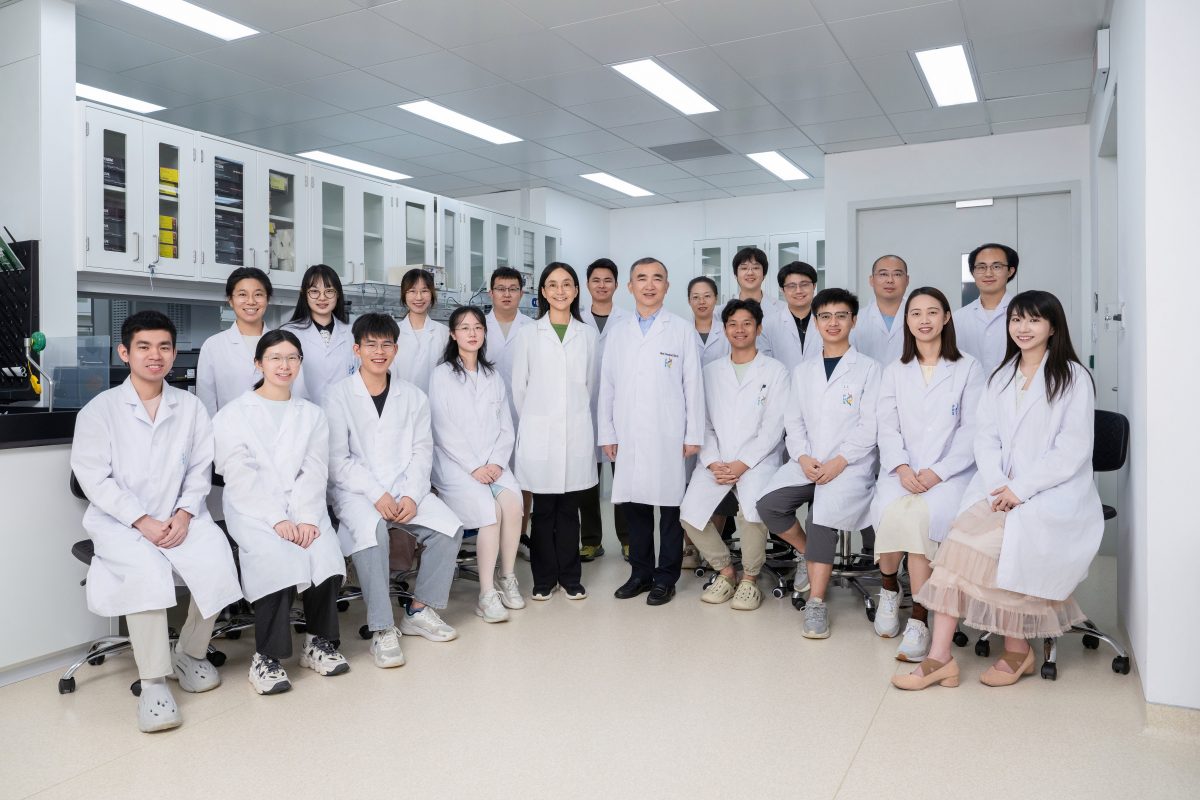
Guokai CHEN and his research team
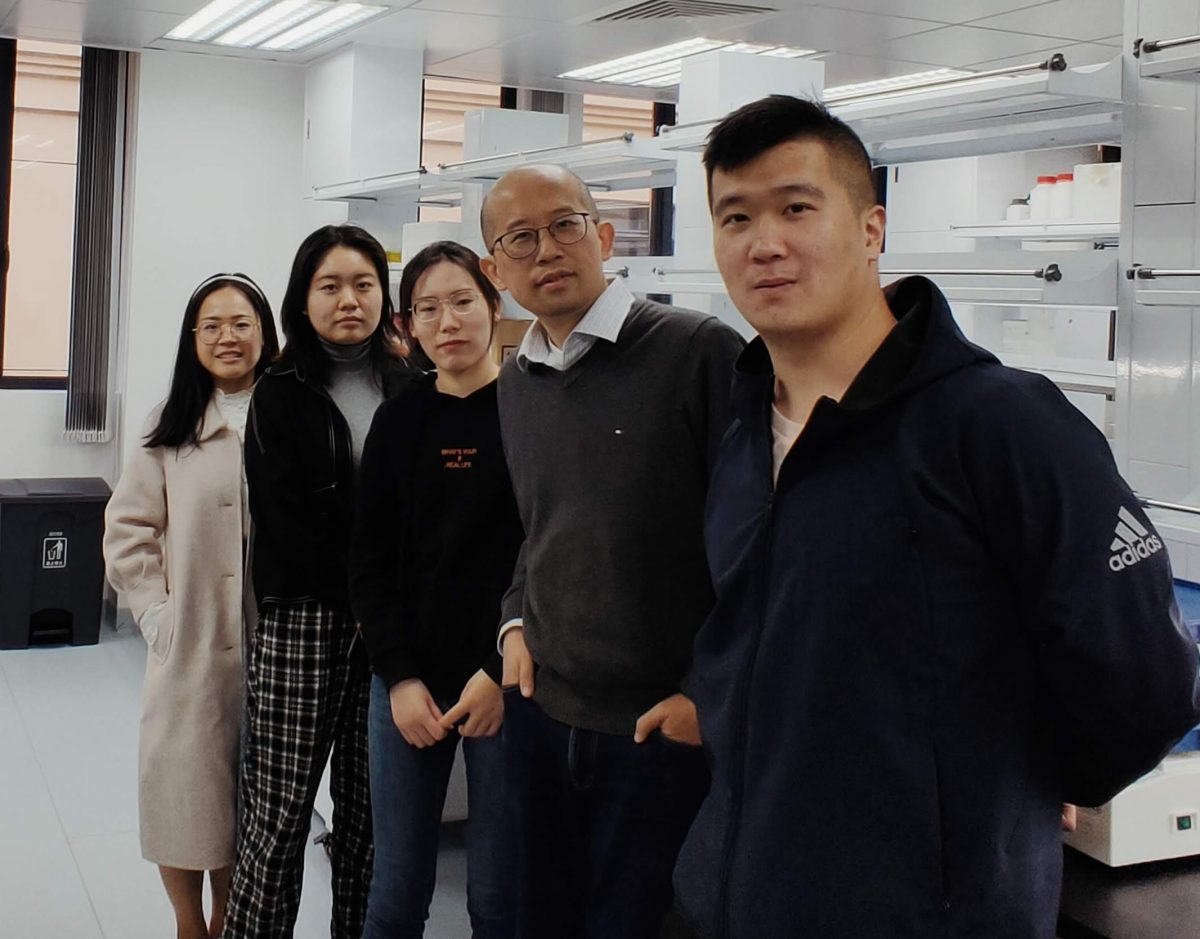
Ningyi SHAO and his research team